The Chain Reaction: How Key Player Absences Alter Betting Markets Over the Course of a Season
Written by Devon Franke · Aug 5, 2026
The Chain Reaction: How Key Player Absences Alter Betting Markets Over the Course of a Season
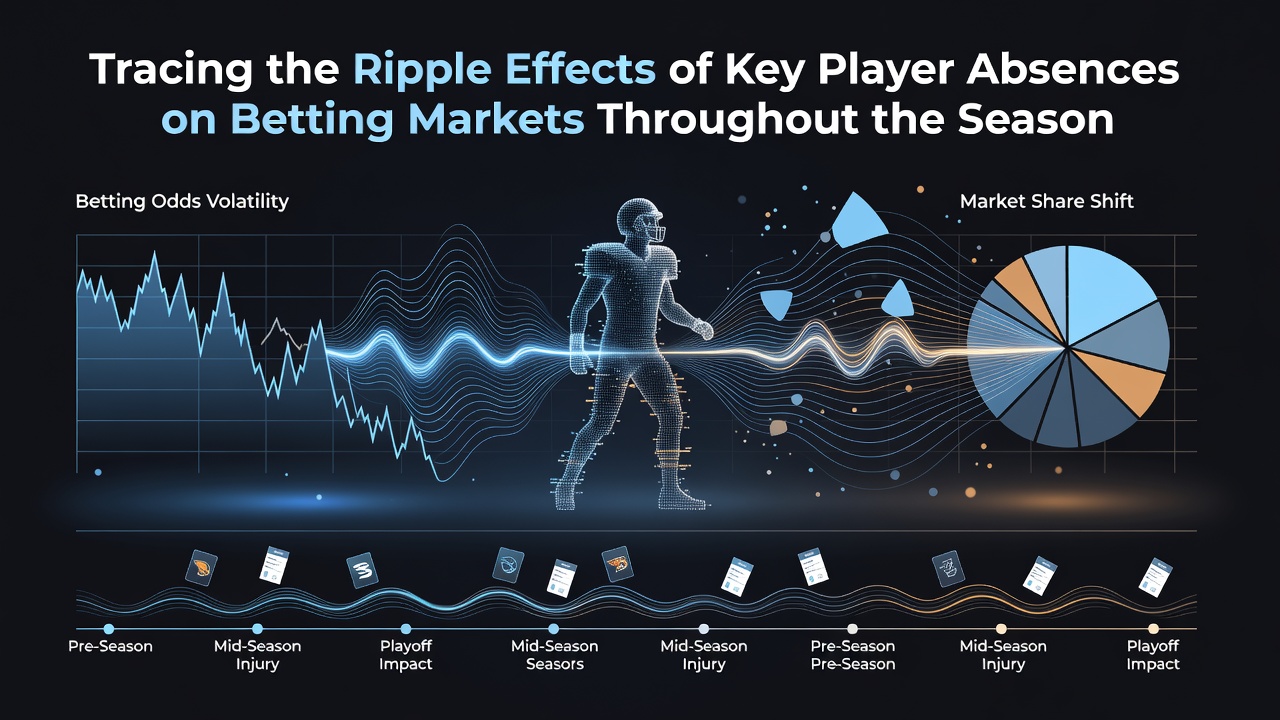
Key player absences create measurable shifts in betting markets as oddsmakers recalibrate spreads, totals, and moneylines based on updated team projections, while bettors respond by reallocating wagers across affected games and related props. These adjustments begin well before tipoff or kickoff and continue through the final weeks of any given campaign. Data from major sportsbooks shows that a single high-impact injury announcement can move a point spread by two to four points within hours, with totals lines following similar patterns when offensive or defensive production expectations drop.
Early Season Adjustments and Preseason Ripple Effects
Training camp injuries in August 2026 often set the tone for opening-week wagering markets, especially in the NFL where depth chart changes influence futures odds and regular-season totals. Observers note that when a starting running back suffers a season-ending injury during joint practices, sharp bettors immediately target under totals on games involving that offense, and sportsbooks respond by shading the line accordingly. This early movement creates correlated opportunities in divisional futures markets, where one team's reduced scoring projection lifts the implied win totals for division rivals. Researchers tracking these patterns across multiple seasons find that markets stabilize within forty-eight hours once the initial wave of public money settles, yet the adjusted lines remain in place for the duration of the affected stretch.
Midseason Injury Waves and Line Volatility
By midseason, cumulative absences compound across rosters and produce more pronounced volatility in both sides and totals markets. When two or three rotation players miss extended time in the NBA, for instance, betting volume on player prop unders rises sharply while team totals lines drift lower by three to five points per game. Experts tracking these movements report that oddsmakers incorporate advanced metrics such as usage rate changes and defensive efficiency drops, then layer in historical performance data from similar roster configurations. The result appears in correlated parlay adjustments, where bettors who once paired an over total with a star's points prop must now navigate new pricing that reflects the altered rotation. Studies examining five consecutive seasons indicate that games following multiple key absences generate 18 to 22 percent higher handle on unders compared with the league average, according to figures released by the American Gaming Association.
Conference Play and Travel-Linked Absence Patterns
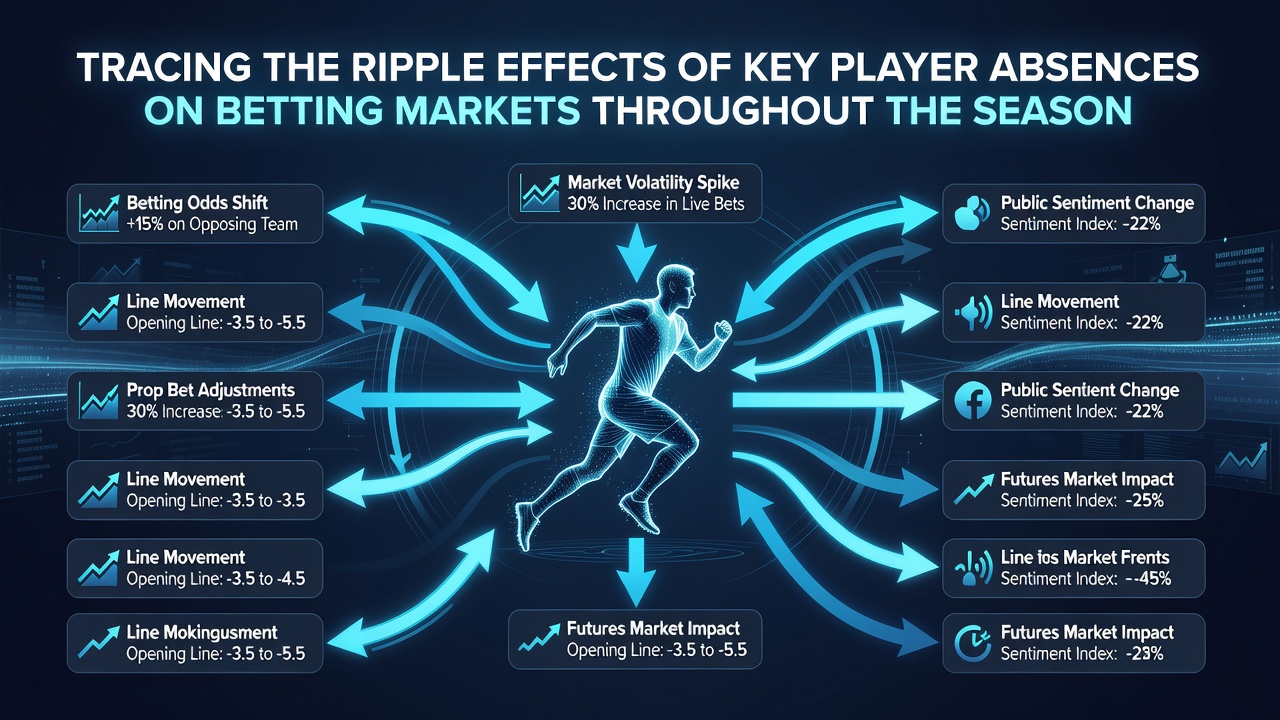
Conference schedules introduce additional layers when injuries coincide with heavy travel stretches, further reshaping market expectations. In college basketball, a star guard's absence during a cross-country trip often leads to totals lines dropping by four to six points as oddsmakers factor in both reduced offensive output and increased fatigue for remaining players. Those who monitor line movement data observe that these adjustments frequently create value on the underdog side as public perception lags behind the updated numbers. Similar dynamics appear in MLB when a starting pitcher lands on the injured list during a west-coast swing, prompting sportsbooks to lower run totals and shift moneyline pricing by 20 to 30 cents. Data released through the New York State Gaming Commission shows that such midweek injury announcements correlate with a measurable uptick in same-game parlay activity centered on lower-scoring outcomes.
Late-Season Playoff Implications and Futures Market Shifts
As the regular season winds down, remaining absences exert outsized influence on playoff positioning bets and series prices. A key forward's unavailability during the final ten games can swing a team's implied playoff odds by three to five percentage points, prompting futures market repricing across multiple sportsbooks. Observers note that these late adjustments also affect in-game wagering, where live totals lines move more aggressively once the absence becomes confirmed. Historical tracking reveals that teams missing their primary scorer post All-Star break cover the spread at rates 7 percent below their season average, a pattern that sharp bettors exploit by targeting opponents in both spread and total markets. The interconnected nature of these changes means one absence can influence pricing on unrelated games through divisional tiebreaker scenarios and seeding implications.
Conclusion
Throughout any given season, player absences trigger a sequence of recalibrations that begin with injury reports and extend through futures, spreads, totals, and prop markets. Oddsmakers integrate performance data and historical analogs while bettors react in real time, producing measurable line movements that persist until the next roster update. These patterns repeat across leagues and conferences, creating consistent opportunities for those who track both injury timelines and market responses. The process continues from August training camp through final postseason games, wth each absence adding another layer to the evolving betting landscape.