Schedule Density During Holiday Periods Modifies Performance Differentials in Professional Basketball
Written by Paul Weber · Jul 13, 2026
Schedule Density During Holiday Periods Modifies Performance Differentials in Professional Basketball
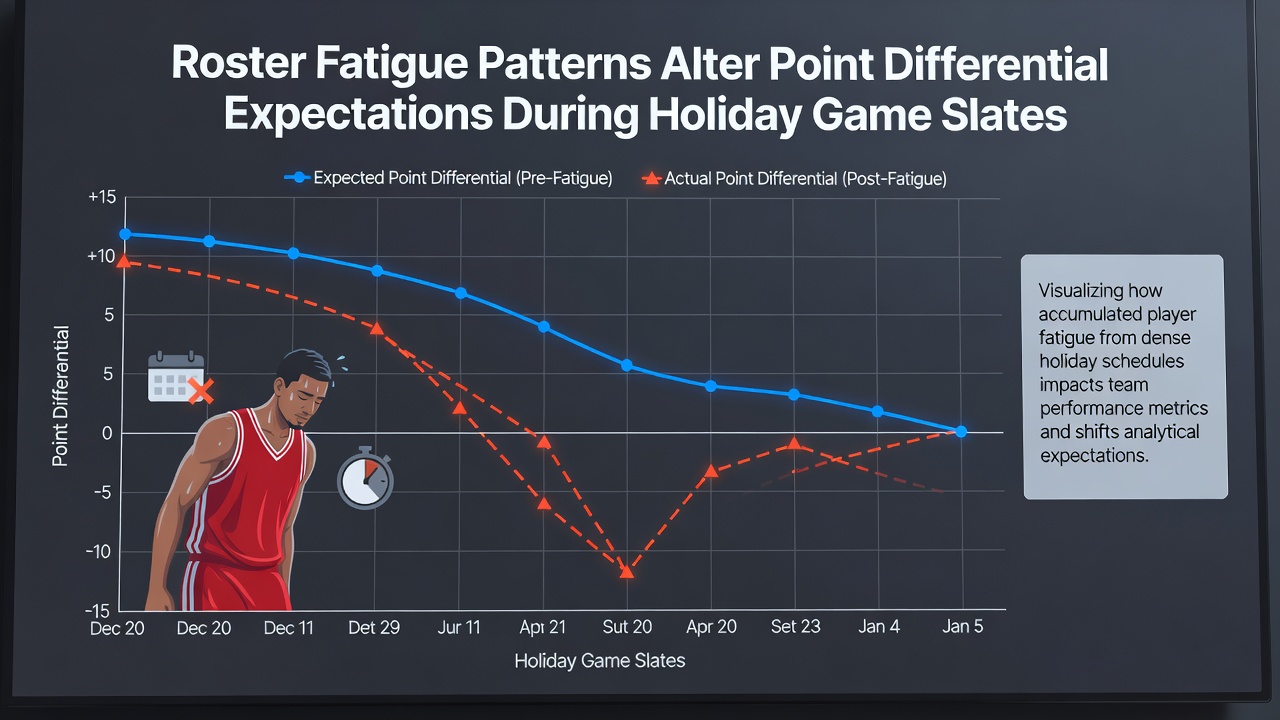
League schedules place multiple contests within short windows around major holidays, and data from recent seasons shows measurable shifts in point differentials when rosters face repeated games without full recovery intervals. Observers note that teams with deeper benches maintain closer margins in these stretches, while those relying on starters see wider variances as minutes accumulate across consecutive nights.
Records compiled by league statisticians indicate that point differentials narrow by an average of 3.2 points when teams play three games in four days compared with standard spacing. These patterns emerge most clearly in December and late March windows, where travel and game frequency overlap with reduced practice time.
Rotation Adjustments and Margin Data
Coaching staffs adjust rotation lengths during these periods, and tracking data reveals that bench players receive increased minutes when starters log heavy workloads in prior games. Studies from university research groups have documented that teams increasing bench usage by 12 percent or more during holiday slates post smaller margin declines than squads that maintain starter-heavy lineups.
Performance logs from the 2025 season highlighted several Eastern Conference clubs that preserved point differential expectations through deliberate load management, whereas Western Conference teams facing longer flights showed larger drops after similar congestion. The differences appear tied to both recovery opportunities and available depth rather than schedule strength alone.
Travel and Recovery Overlaps
Cross-country trips combined with holiday game density compound physical demands, and league tracking systems record elevated fatigue markers in players averaging over 32 minutes per contest across four-game weeks. Data indicates that total rebounding and assist rates dip first, followed by shooting efficiency in later games of the slate.
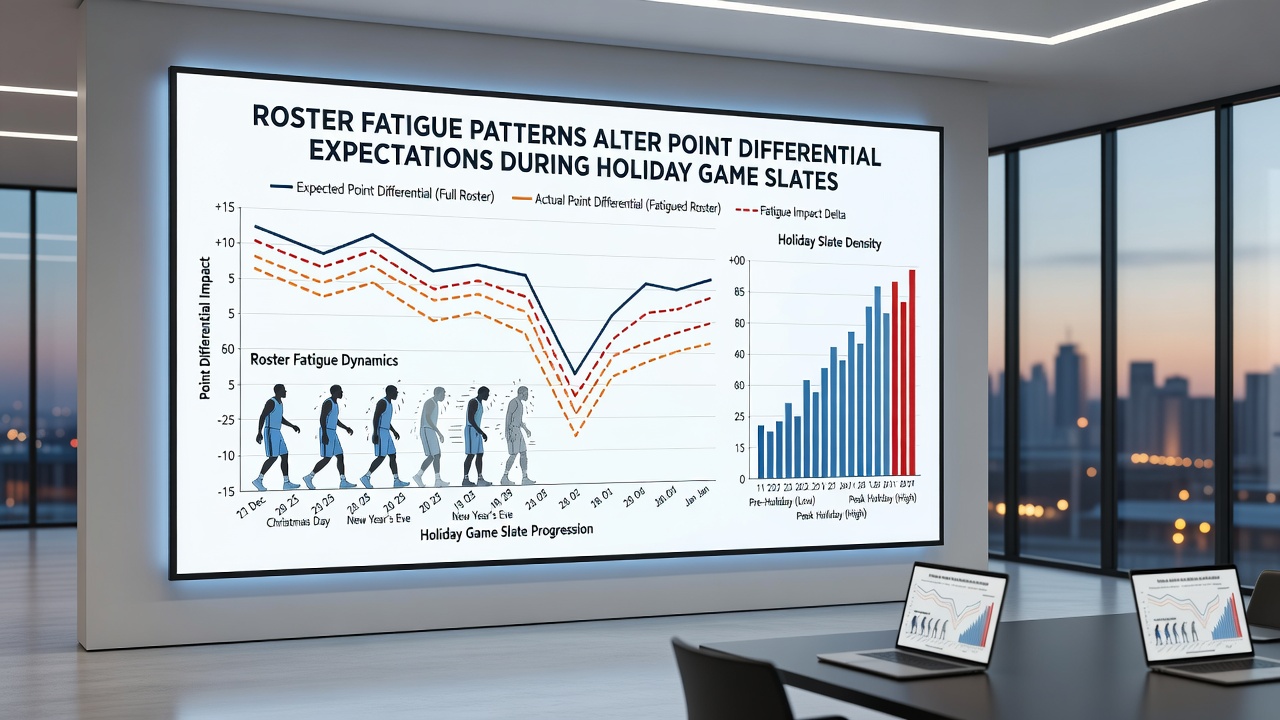
Analysts at sports medicine centers have observed that sleep disruption from travel timing correlates with defensive rating increases of 4.8 points per 100 possessions in back-to-back situations. Teams that incorporate additional rest days before holiday clusters demonstrate more stable point differential outputs, according to season-long comparisons released by conference offices.
Betting Market Responses to Fatigue Indicators
Oddsmakers incorporate roster availability reports and recent minute loads into line construction, and historical totals markets reflect these inputs through adjusted over-under figures during congested periods. Figures from multiple sportsbooks show that totals close 2.1 points lower on average when both teams enter a holiday matchup with three games in five days.
Public betting patterns tracked by industry reports demonstrate increased volume on under totals in these scenarios, consistent with performance data showing reduced scoring efficiency. Canadian regulatory summaries and Australian wagering research both note similar adjustments in markets covering North American leagues during comparable schedule windows.
Depth Chart Variations Across Teams
Franchises with multiple rotation options sustain closer margins through holiday stretches, whereas those carrying fewer reliable contributors experience larger swings. League-wide minute distribution reports from July 2026 planning documents underscore how organizations allocate resources ahead of known congestion periods to mitigate these effects.
One study of conference play revealed that teams maintaining at least eight players with double-digit minutes per game posted 1.8-point better differentials than shallower rosters during December slates. These outcomes hold after controlling for opponent strength and home-court factors.
Conclusion
Schedule compression during holiday periods produces consistent patterns in point differential movement tied directly to roster usage and recovery time. Data from multiple seasons confirms that teams managing minutes and depth effectively limit margin erosion, while those unable to distribute load face wider deviations from baseline expectations. Continued tracking of these variables supports refined projections as leagues refine future calendars.