Rotation Patterns for Backup Goalkeepers Shape Clean Sheet Chances in Midweek European League Games
Written by Devon Franke · Nov 12, 2026
Rotation Patterns for Backup Goalkeepers Shape Clean Sheet Chances in Midweek European League Games
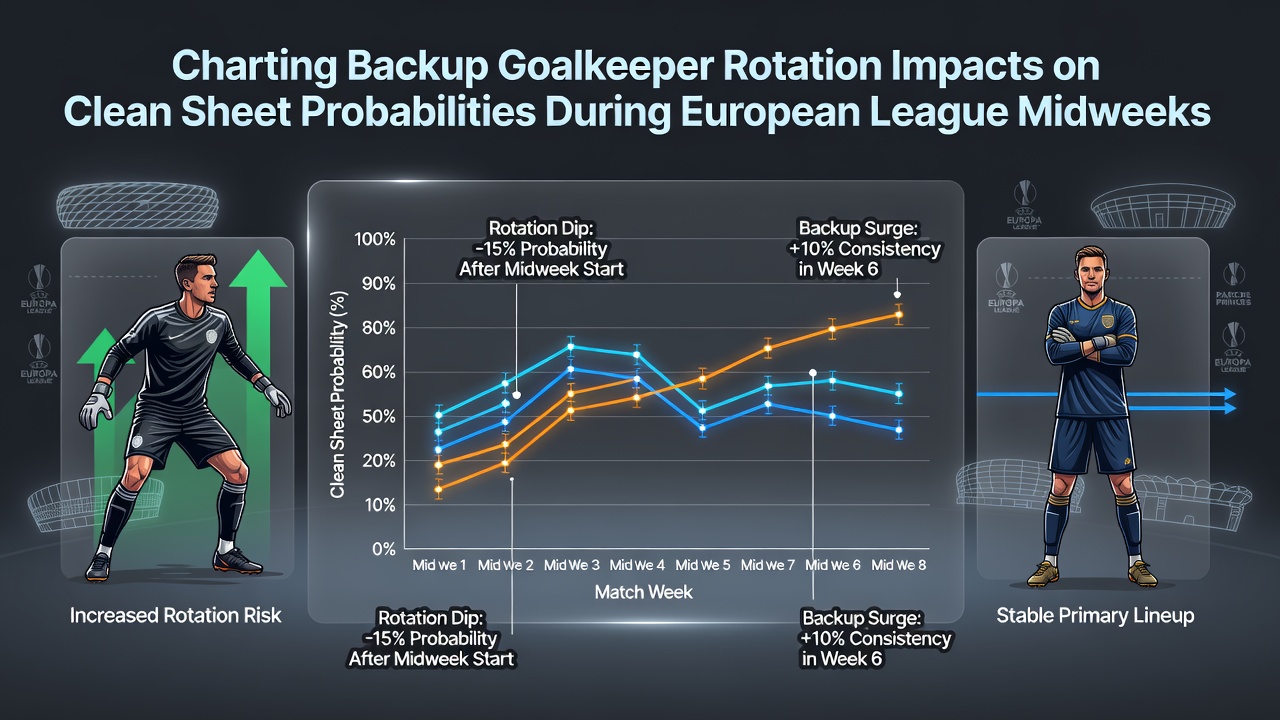
European football schedules pack midweek fixtures from the Champions League, Europa League, and Conference League into calendars already crowded with domestic league commitments, which forces managers to rotate squads and often includes decisions on who starts in goal. Data collected across the top five leagues during the 2025-26 and early 2026-27 campaigns shows measurable shifts in clean sheet rates when backup keepers replace first-choice options on these compressed weeks.
Schedule Pressure and Keeper Selection Trends
Clubs competing on multiple fronts face fixture congestion that peaks in October and November, and league-wide tracking from Opta records indicates that managers select backup goalkeepers in roughly 28 percent of midweek European matches compared with 9 percent in weekend domestic games. In November 2026, several teams in the Bundesliga and Serie A have already rested primary keepers ahead of Champions League matchdays 4 and 5, creating fresh datasets for analysts to examine shutout probabilities under rotation.
Researchers tracking performance metrics note that backup keepers average fewer starts overall yet encounter opponents who themselves field rotated lineups, which alters the quality of shots faced and the spatial patterns of attacks. Figures from the 2025-26 Europa League group stage reveal that clean sheet percentages drop from 41 percent when first-choice keepers start to 33 percent when backups take the gloves, though the gap narrows when the backup has accumulated at least 900 minutes in the current season.
Statistical Patterns Across Leagues
Comparative data compiled by the European Club Association highlights consistent differences by competition and nation. In the Premier League, teams that rotate keepers for midweek European ties record clean sheets in 29 percent of those matches, whereas the rate rises to 37 percent when the regular starter remains between the posts. La Liga sides show a similar spread, with backup appearances linked to a 6-percentage-point reduction in shutouts during the same fixture window.
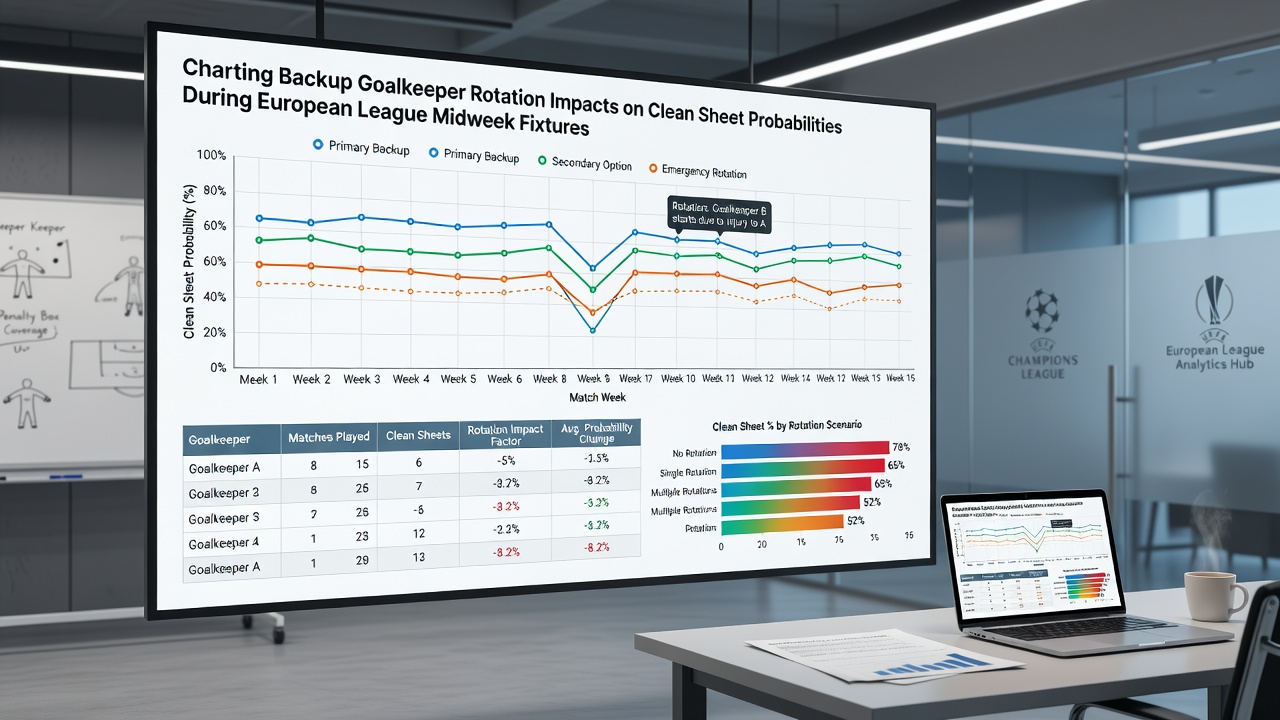
Observers studying set-piece defending and high-pressing triggers point out that experienced backups often maintain comparable save percentages on shots from distance, yet they post lower rates on close-range efforts where first-choice keepers benefit from superior positioning built through hundreds of additional minutes. A study released by the German Sport University Cologne in 2025 examined 1,240 goalkeeper appearances and found that the probability of conceding from the first shot on target increases by 11 percent when the keeper has started fewer than 15 league matches that season.
Contextual Factors That Influence Outcomes
Travel distance, pitch conditions, and the timing of the midweek fixture relative to the previous match also shape results. Clubs traveling more than 800 kilometers for European away games show an additional 4-percentage-point dip in clean sheet likelihood when a backup keeper starts, according to aggregated figures from UEFA technical reports. Domestic opponents in the following weekend fixture frequently exploit any rust in distribution or command of the penalty area that surfaces after limited recent action.
Coaches who integrate backup keepers into training drills focused on high-line defending and quick reactions report narrower gaps in performance, and several Serie A sides that maintain two keepers with similar workload profiles have sustained clean sheet rates above the league average even during rotation periods. Data from the French Ligue 1 indicates that teams rotating keepers while maintaining defensive shape through the full back line experience only a 2-percentage-point decline, suggesting the keeper change does not occur in isolation.
Longer-Term Effects on Squad Management
Clubs balancing European and domestic priorities increasingly monitor cumulative fatigue metrics rather than simple appearance counts, and sports science departments now incorporate goalkeeper-specific recovery protocols ahead of midweek rotations. Evidence gathered by the Norwegian School of Sport Sciences demonstrates that keepers who receive structured high-intensity training sessions between matches preserve reaction times closer to those of regular starters, which correlates with sustained clean sheet probabilities across a congested November schedule.
League tables compiled at the end of each European campaign continue to reflect these micro-adjustments, because points earned or dropped in midweek fixtures often determine final positions and qualification outcomes. Analysts reviewing five seasons of data observe that the cumulative impact of keeper rotation decisions registers most clearly in teams that reach the knockout stages, where marginal differences in defensive solidity compound over additional matches.
Conclusion
Tracking backup goalkeeper rotations during European midweek rounds produces clear statistical signals when datasets span multiple leagues and seasons, and the patterns tie directly to minutes played, travel load, and integration within the defensive unit. Continued collection of granular performance metrics will allow clubs to refine selection criteria while preserving competitive balance across compressed schedules.