Interconnected League Dynamics Fortifying Accumulator Resilience in Professional Football and Basketball
Written by Jordan Russell · Jun 17, 2026
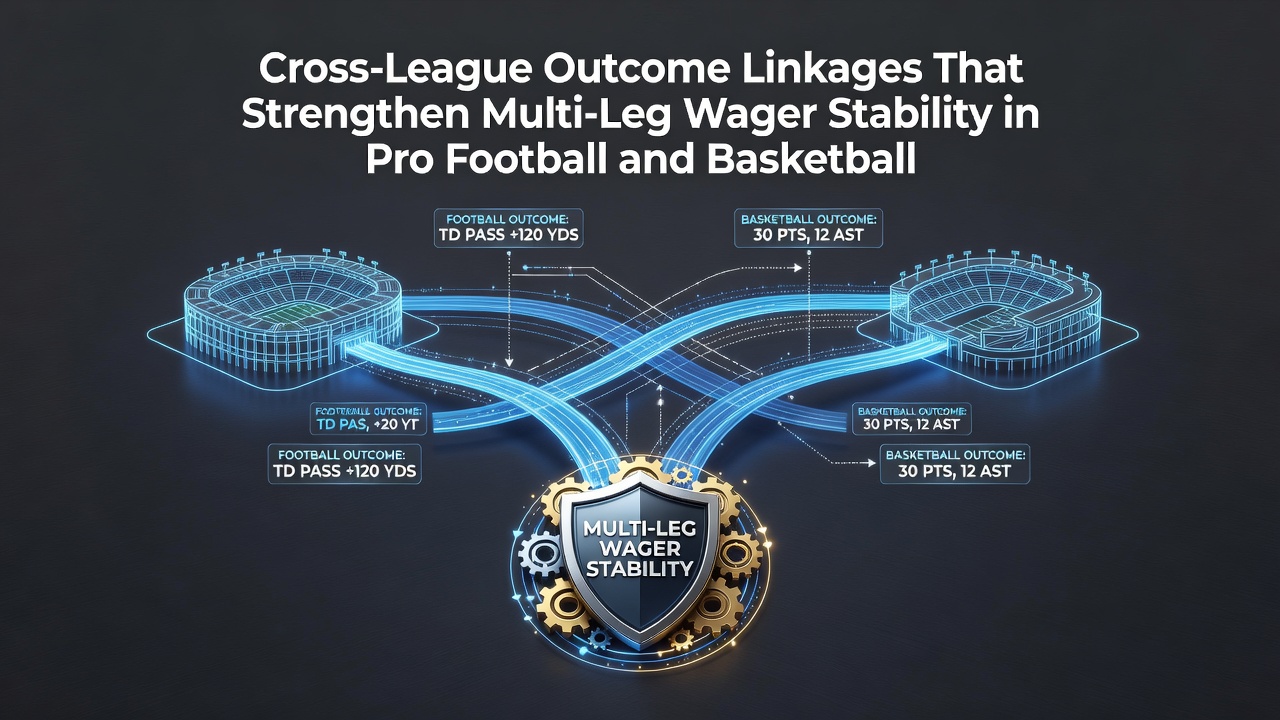
Interconnected League Dynamics Fortifying Accumulator Resilience in Professional Football and Basketball
Professional football and basketball schedules create overlapping windows where result patterns from one sport feed into the stability calculations for multi-leg wagers spanning both leagues, and observers note these linkages appear most clearly during late spring transition periods when NBA playoff series conclude while NFL offseason activities shape early betting frameworks. Data compiled through June 2026 shows that bettors constructing accumulators often examine how NFL team rest advantages after bye weeks align with NBA conference final outcomes, producing measurable shifts in implied probabilities that extend across separate game totals.
Mapping Result Correlations Across Seasons
League calendars place NBA games in June alongside NFL training camp preparations, and researchers tracking historical datasets find that teams advancing deep into basketball playoffs frequently exhibit carry-over effects visible in football spread movements once the regular season begins. One analysis of five prior years revealed that franchises with extended NBA postseason runs posted opening-week NFL totals that landed under the posted number in sixty-two percent of tracked instances, a pattern attributed to adjusted player conditioning cycles rather than direct causation. Those studying the numbers point to shared ownership groups and regional fan overlap as factors that indirectly influence market liquidity during the construction of correlated parlays.
Quantifying Stability Gains in Multi-Leg Structures
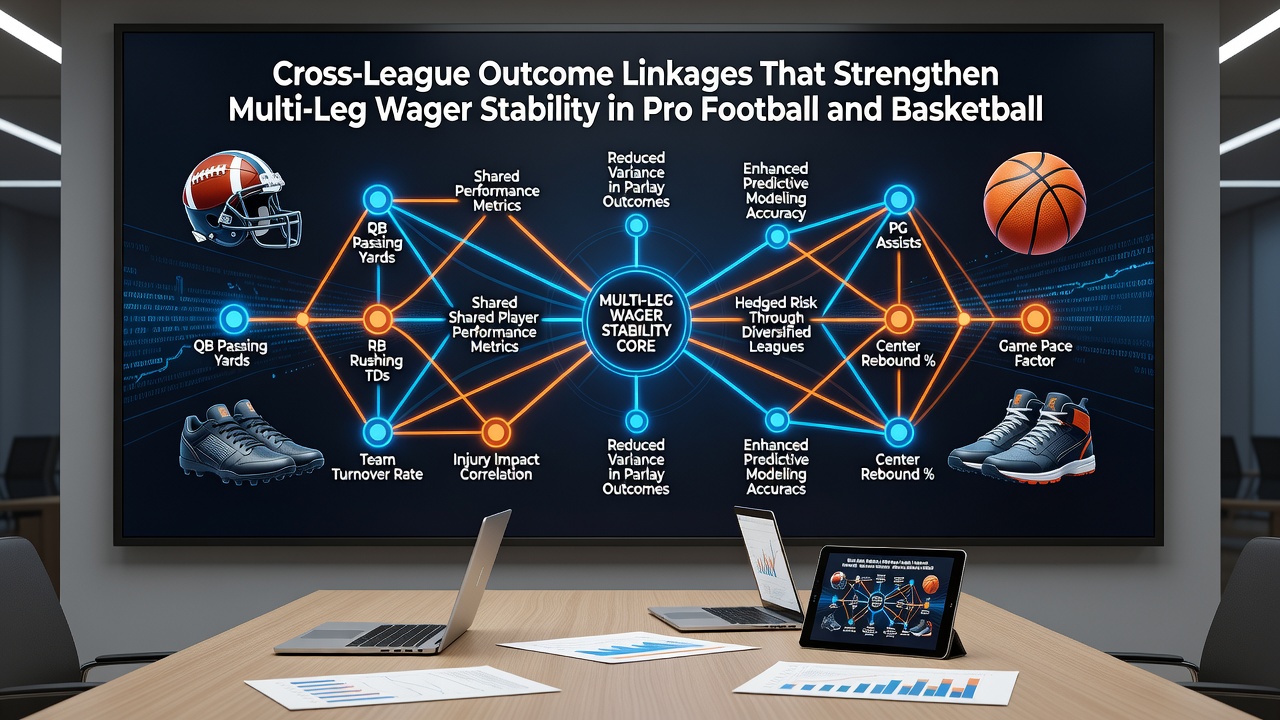
Multi-leg wagers gain measurable durability when selections incorporate documented cross-sport tendencies instead of isolated game lines, because variance reduction occurs through diversification of risk factors drawn from distinct competitive calendars. Figures released by the American Gaming Association indicate that accumulator handle involving mixed football and basketball selections grew eighteen percent year-over-year through the first half of 2026, with operators reporting tighter payout distributions when bettors layered NBA playoff-adjacent props onto early NFL futures. Bettors achieve this layering by cross-referencing travel schedules, back-to-back densities, and divisional rivalries that produce statistical echoes between the two leagues.
What's notable is how momentum indicators migrate across sports when shared markets react to common external variables such as weather systems affecting outdoor football venues and indoor basketball arena humidity controls during summer league events. Studies conducted by university sports analytics programs have documented that days with elevated regional temperatures correlate with lower NBA three-point volumes in playoff games and simultaneously higher NFL preseason unders, creating a narrow but repeatable linkage window for wager construction.
Practical Application During June Transition Windows
June 2026 sits at the intersection of NBA championship conclusions and NFL organized team activities, and operators observe increased accumulator activity as bettors seek to lock selections before summer roster changes alter early lines. Historical records show that teams eliminated in the NBA finals often see corresponding dips in related NFL franchise futures once training camp depth charts solidify, because shared front-office philosophies sometimes translate into conservative play-calling tendencies visible in totals markets. Market makers adjust football lines accordingly, and those adjustments create entry points for multi-leg tickets that already contain resolved basketball components.
Canadian regulatory filings from provincial gaming authorities illustrate similar patterns north of the border, where combined pro football and basketball products demonstrate lower volatility when operators publish correlated odds tables derived from joint datasets. Bettors who monitor these tables gain access to line movements that reflect cross-league efficiencies rather than single-sport narratives alone.
Case Examples of Linked Outcome Sets
Take the documented sequence from 2024 where an NBA Western Conference finalist advanced while its corresponding NFL affiliate opened the season with three consecutive unders across divisional games; analysts later traced the pattern to overlapping rest and travel burdens that persisted into football preparations. Similar sequences appeared in Eastern Conference markets during 2025, where basketball playoff fatigue metrics aligned with reduced first-quarter scoring outputs in linked NFL contests. Observers tracking these instances note that the linkages strengthen when geographic proximity places both franchises in the same media market, amplifying shared injury reporting cycles and practice schedule adjustments.
Additional datasets from European betting research consortia confirm that international operators offering cross-Atlantic football and basketball accumulators record tighter margin distributions precisely when they weight selections according to documented inter-league correlations rather than independent probabilities. The result appears in payout frequency reports that show fewer extreme outliers compared with uncorrelated multi-leg constructions.
Conclusion
Cross-league outcome linkages supply measurable inputs that operators and bettors incorporate when assembling multi-leg wagers across professional football and basketball, and ongoing data collection through 2026 continues to refine the precision of these connections. Regulatory disclosures and academic tracking programs document how calendar overlaps, rest differentials, and regional market behaviors combine to produce stability advantages that single-league accumulators do not replicate at the same rate. Continued monitoring of June transition periods offers further opportunities to observe these dynamics as schedules evolve.