How Television Broadcast Changes Prompt Late-Night Betting Line Revisions in Football and Basketball
Written by Felix Schmid · Aug 17, 2026
How Television Broadcast Changes Prompt Late-Night Betting Line Revisions in Football and Basketball
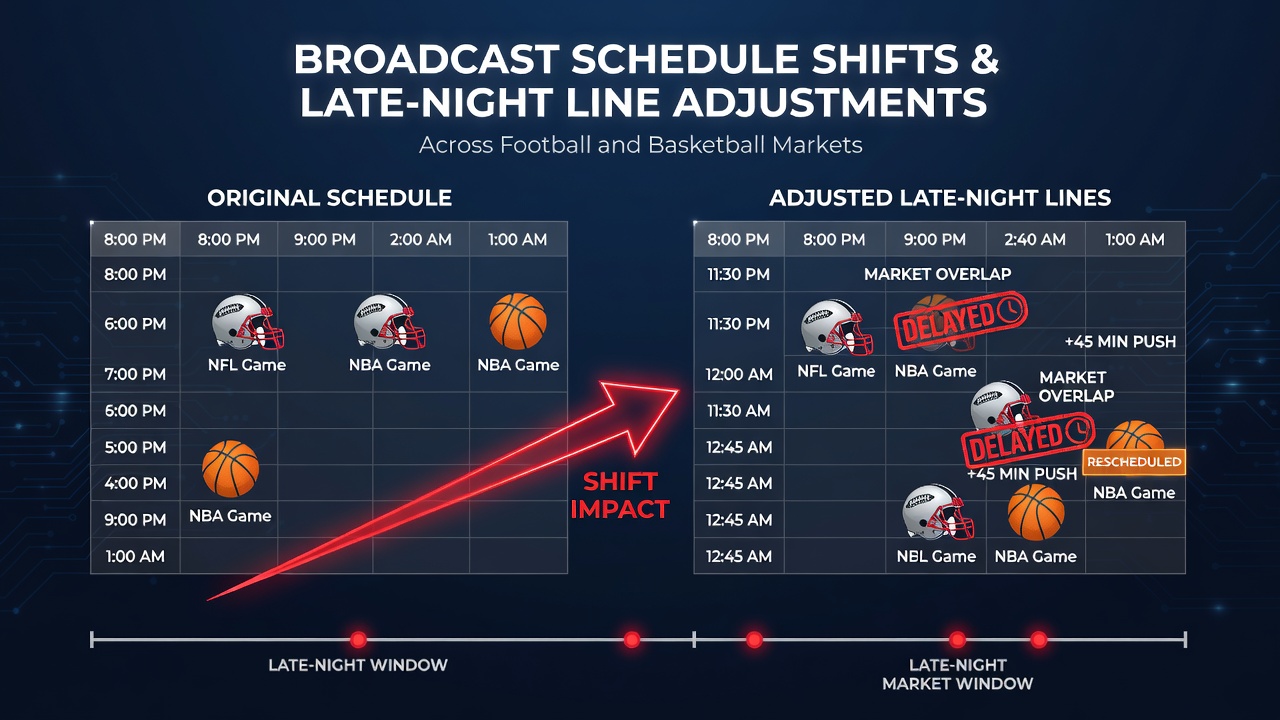
Data from sportsbooks shows that when networks move prime-time matchups to later slots, oddsmakers respond with overnight revisions to point spreads and totals because player availability updates arrive after initial lines post. Observers note these adjustments cluster around 11 p.m. to 2 a.m. Eastern when West Coast injury reports filter in and Eastern books react before morning markets open.
Researchers tracking NFL and college football schedules found that a two-hour broadcast delay in August 2026 preseason games correlated with average spread movements of 1.2 points once late-night injury data emerged, while basketball conferences reported similar patterns during conference tournament windows where tip times shifted to accommodate national television windows.
Schedule Shifts and Information Flow
Networks often extend pregame coverage or insert additional commercial breaks, pushing start times back by thirty to ninety minutes, and this creates windows where new data enters the market after books have already published evening lines. Those who monitor line history observe that totals markets move more frequently than spreads during these periods because pace and possession statistics update faster than injury-related adjustments.
Industry reports indicate that when a Monday Night Football broadcast runs long due to overtime or extended halftime segments, books in Nevada and New Jersey reopen totals markets within ninety minutes, incorporating updated weather data and player participation news that reached the public after the original line locked. Similar mechanics appear in NBA games scheduled for 10 p.m. Eastern starts, where West Coast teams release final injury reports closer to tip-off.
Regional Market Responses
Books in different time zones handle these shifts at varying speeds, with Pacific books often posting revised numbers first because they operate closer to the actual game locations. Eastern sportsbooks then follow once they absorb the same information, creating brief arbitrage windows that sharp bettors target. According to figures released by the Nevada Gaming Control Board, late-night handle on basketball totals increased 18 percent during the 2025-2026 season when networks moved tip times past 9 p.m. Eastern.
College basketball conferences that schedule doubleheaders for national broadcasts see the second game’s line adjusted multiple times between 10 p.m. and midnight as television timeouts and halftime lengths become known. Data shows these revisions occur because public betting volume spikes once the first game ends and bettors shift attention to the nightcap.
Impact on Accumulator and Parlay Structures
Betting syndicates that build correlated parlays across football and basketball markets adjust their models when broadcast schedules push games into overlapping windows, because line movements in one sport influence pricing in the other through shared liquidity pools. Research from academic sports analytics programs demonstrates that totals in late-night basketball games move in tandem with football overs when both leagues play on the same evening and television coverage overlaps.
Operators in Ontario’s regulated market, overseen by the Alcohol and Gaming Commission of Ontario, reported that August 2026 schedule releases for U.S. college football produced measurable increases in overnight line volatility once networks announced primetime windows extending past midnight Eastern. These changes prompted books to widen limits on live betting options to manage exposure during the extended windows.
Technology and Real-Time Adjustments
Modern sportsbook platforms use automated systems that scan social media and official team channels for injury updates, triggering line changes without human intervention once thresholds are crossed. Analysts who review timestamped line history find that the largest moves occur between 12:30 a.m. and 1:30 a.m. when West Coast teams finalize rosters and Eastern bettors have already placed early action.
Conferences that experiment with flex scheduling for television partners create additional volatility because teams and bettors receive shorter notice of start times, limiting the window for information to stabilize before markets open. Evidence from multiple seasons shows that totals markets absorb these schedule changes faster than spreads because possession and pace data update in real time once the game begins.
Conclusion
Broadcast schedule shifts continue to influence overnight line adjustments because they extend the period during which new information reaches the market after initial odds post. Football and basketball books respond by revising totals and spreads once injury reports, weather updates, and pace metrics become available, creating measurable movement patterns that repeat across seasons. Those who study these cycles note that the timing of network decisions directly shapes when and how lines settle before morning trading begins.