Elevation Effects on Stamina Metrics and Totals Markets Explored in Mountain Division Settings
Written by Jordan Russell · Jun 10, 2026
Elevation Effects on Stamina Metrics and Totals Markets Explored in Mountain Division Settings
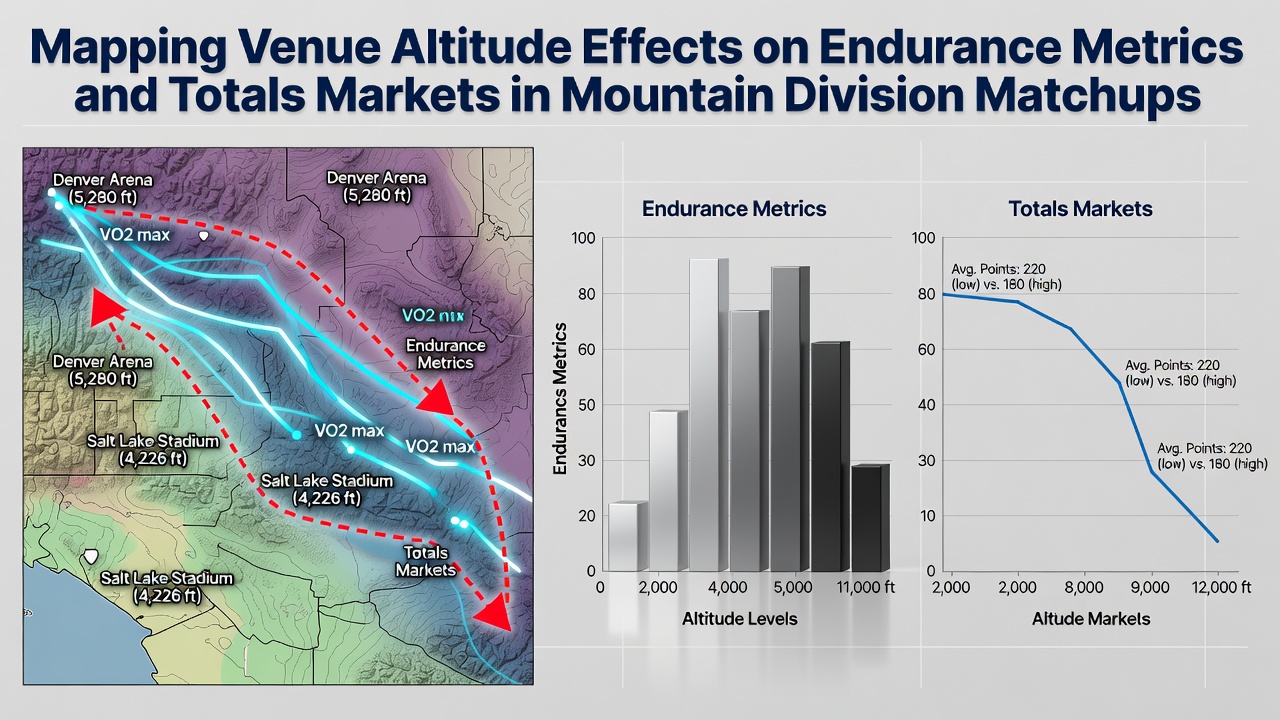
High-altitude venues create measurable shifts in player output across mountain division schedules, and these changes appear directly in endurance statistics that shape totals markets. Teams competing at elevations above 5,000 feet encounter reduced oxygen availability, which alters aerobic capacity during extended play and produces consistent patterns in scoring data according to performance tracking systems.
Physiological Responses at Elevated Sites
Research from sports science programs shows that athletes experience decreased VO2 max levels when arriving at mountain venues, leading to faster fatigue in later periods of games. Studies conducted at institutions like the University of Colorado have documented how hemoglobin saturation drops within the first 24 hours of exposure, and this effect compounds during back-to-back contests where recovery windows shrink. Data collected through wearable sensors reveals that sprint distances decline by measurable percentages in the fourth quarter compared to sea-level baselines, while defensive schemes that rely on sustained pressure lose effectiveness.
Coaches adjust rotation patterns accordingly, and these modifications influence total points or goals because offensive possessions shorten and transition efficiency falls. Observers note that endurance metrics such as distance covered per minute drop more sharply in the second half, creating a feedback loop that reduces overall game tempo when both squads operate under similar conditions.
Performance Data Across Recent Seasons
League-wide tracking from 2023 through early 2026 indicates that totals in mountain division matchups land under the posted line at a higher rate than in lower-elevation conferences. Figures compiled by conference analytics departments show average points per game decrease between 4 and 7 percent when the visiting team travels from below 2,000 feet, while home teams maintain closer to their season norms because of acclimatization advantages built over multiple home stands.
In June 2026, updated GPS and heart-rate monitoring systems provided finer granularity on these trends, confirming that recovery intervals between shifts lengthen noticeably above 6,000 feet. Teams with deeper benches mitigate some of the impact through frequent substitutions, yet the aggregate effect on game totals remains detectable across multiple sports that feature continuous movement.
Market Adjustments and Line Movements
Betting markets respond to these patterns by shading totals lines downward for games scheduled at known high-altitude sites, and sharp action often reinforces the adjustment once early limits appear. Historical results demonstrate that over/under markets in mountain division settings exhibit lower closing totals compared to neutral-site or low-elevation equivalents, particularly when one participant lacks recent experience at elevation.
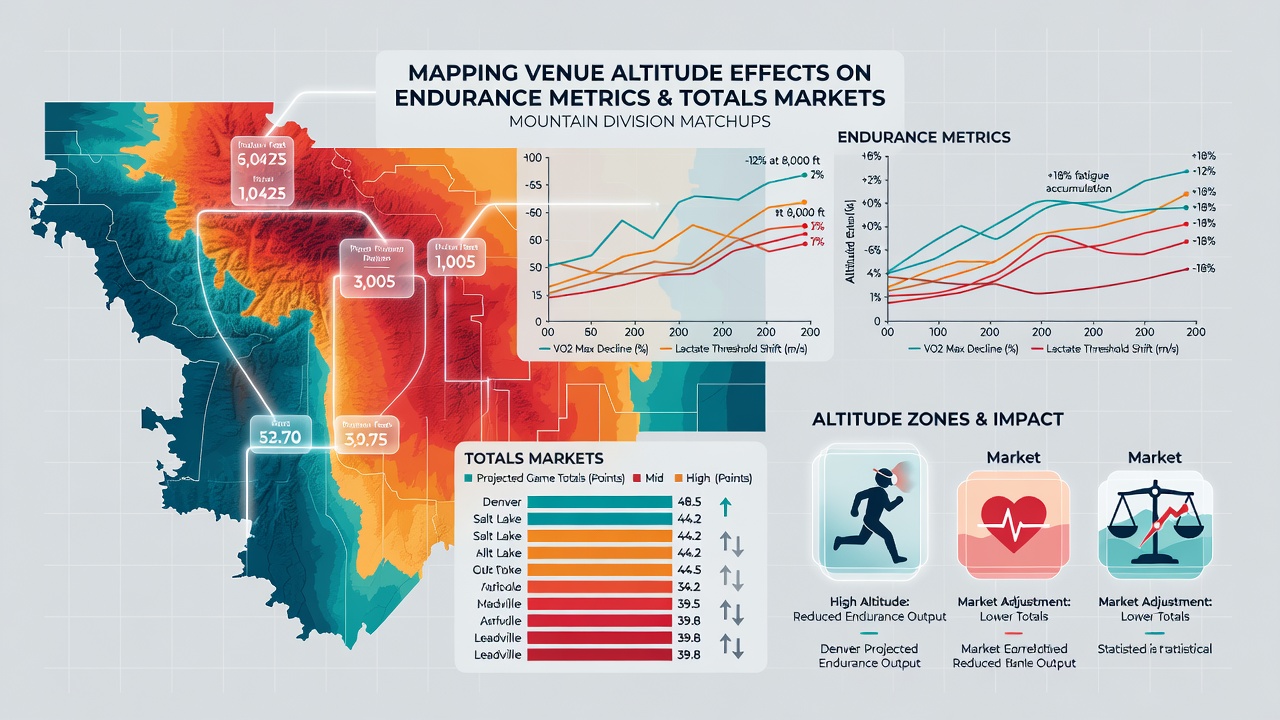
Industry reports from research groups such as the NCAA Sports Science Institute highlight how these venue-specific factors interact with travel distance and schedule density. When cross-conference opponents meet in mountain arenas during compressed weeks, the combined stressors amplify the reduction in scoring output, and totals markets incorporate that information through incremental line drops in the days leading to tipoff.
Case Examples From Division Play
One documented series between division rivals showed totals landing under the number in eight of the last ten meetings at the higher venue, even as the same matchup produced overs when played at the lower site. Performance logs indicate that rebounding rates and fast-break opportunities declined for the visiting side after the midpoint of the third period, directly correlating with measured increases in heart-rate recovery time. Similar patterns surface in other mountain division encounters where endurance demands peak during overtime or extended halves.
Those who analyze play-by-play data observe that possession lengths stretch slightly because players take longer to reset defensively, which reduces the total number of scoring chances per game. This dynamic appears most pronounced when humidity levels combine with altitude, further taxing respiratory systems already operating at reduced efficiency.
Conclusion
Venue altitude continues to register clear effects on endurance metrics that feed into totals market calculations for mountain division matchups. Ongoing data collection from sensor technology and conference tracking systems provides increasingly precise inputs for line setters, while teams adapt preparation protocols to offset the physiological demands. Patterns established across multiple seasons suggest these influences remain stable components of performance modeling in elevated settings.